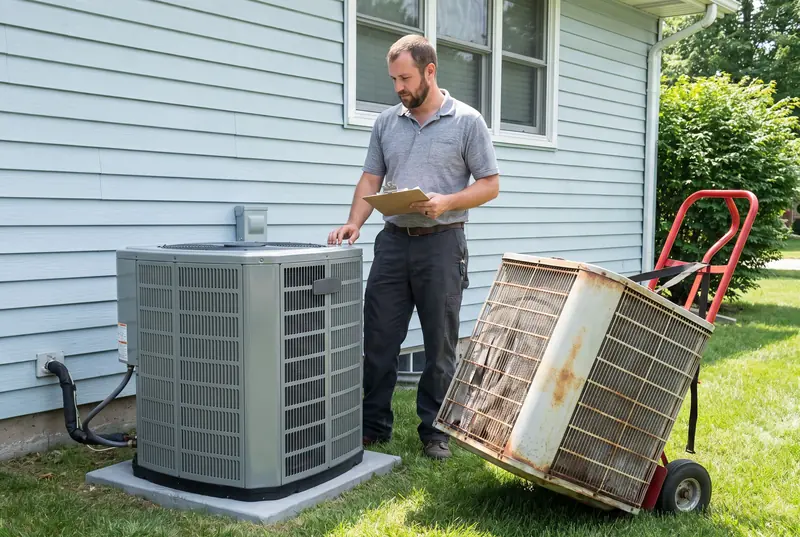

There comes a point when keeping an old system running costs more than replacing it, and pinpointing it takes honest arithmetic rather than a sales pitch. For most homes in Berkeley, CA, the clues cluster: rising amp draw on a tired compressor, a heat exchanger flagged at inspection, refrigerant that keeps disappearing from an R-22 or early R-410A system, and bills that grow as comfort shrinks. When a major repair lands on equipment past the twelve-to-fifteen-year mark, it is usually a stopgap on technology that already trails current SEER2 and AFUE standards.
Our two most requested repairs are AC Repair and Furnace Repair. If something has stopped working, start there.
Warning Signs for HVAC Replacement
The sooner you notice these red flags, the easier and cheaper the fix. Watch for these telltale signs:
- Persistent comfort problems that no repair has solved
- Your equipment is over twelve to fifteen years old and breaking down more often
- Repair bills stacking up faster, each larger than the one before
- The system runs R-22 or leaks refrigerant faster than top-offs make sense
- Higher energy bills year after year with no obvious explanation
- Rust, soot, or corrosion advancing across the cabinet and coils
- Clanking, buzzing, or roaring every time the system cycles
- A failed compressor or cracked heat exchanger, the repairs that tip the decision
Early Action Saves Money
Most HVAC failures start small, a weak capacitor, a squealing blower, a system that runs a little longer each week. If you notice any of these signs, call (510) 201-4758 for a prompt inspection.